Most 12V compressor fridges use about 15–60Ah per day. A common 40–50L caravan or camping fridge often lands around 25–35Ah/day in mild conditions, but heat, poor ventilation, warm drinks and frequent opening can push it much higher. The useful figure is the energy used over 24 hours, not only the running amps printed on the label.
How does a 12V compressor fridge work?
A compressor fridge does not create cold; it moves heat from inside the cabinet to the outside air. Refrigerant absorbs heat at the evaporator, the compressor pumps it through the system, and the condenser releases that heat through the external vents. Clear airflow around the compressor and condenser therefore has a direct effect on power use.
A thermostat switches the compressor on when the cabinet warms above its set temperature and off again once it cools down. The fridge remains connected to the 12V battery all day, but it normally draws its full running current only during those compressor cycles. Hot weather, warm food, frequent openings and poor ventilation make the cycles longer and increase the daily amp-hour total.
12V compressor fridge power consumption by size
If you do not have a tested 24-hour figure for your exact fridge, these numbers are a reasonable place to start. They are planning figures, not guarantees. Weather, ventilation and fridge settings can easily move a fridge from one end of the range to the other.
| Fridge size | Typical use | Planning range |
|---|---|---|
| 15–30L | Small vehicle or weekend fridge | 15–25Ah/day |
| 35–50L | Common 4WD touring size | 25–35Ah/day |
| 55–75L | Family or longer-trip fridge | 30–45Ah/day |
| 80–110L | Large or dual-zone unit | 40–60Ah/day |
A 40L fridge might use around 28Ah on a mild day and more than 40Ah in a heat-soaked canopy. If you tour in Australian summer conditions, leave some headroom rather than sizing the whole system around the best-case number.
12V caravan fridge power consumption
A caravan installation does not change the basic compressor maths, but it can change the conditions around the fridge. An efficient 40–50L 12V caravan fridge may use around 25–35Ah/day in mild weather. An upright model inside a warm cabinet, with limited ventilation or regular door opening, can move toward the upper end of its range. When comparing caravan fridges, look for a tested 24-hour Ah or Wh figure and check the temperature and ventilation used in the test.
How many amps does a 12V fridge pull?
This is where fridge specs can be misleading. If the label says 3A, that normally means roughly 3A while the compressor is running. It does not sit there drawing 3A for 24 hours. The compressor runs until the fridge is cold enough, switches off, then starts again later.
If it draws 3A while running and runs for about 40% of the day, the rough calculation is:
3A × 0.40 × 24 hours = 28.8Ah per day
That run time is the duty cycle. On a cool day it may be much lower; in serious heat it can be much higher. For battery sizing, the 24-hour Ah or Wh figure tells you far more than watching the live current for a few minutes.
What about compressor start-up?
There can be a short current spike when the compressor starts. Usually the bigger problem is not the battery itself but the wiring between the battery and fridge. A poor plug, long cable run or undersized cable can drop enough voltage for the fridge to trip its low-voltage protection. You can have plenty left in the battery and still have the fridge cutting out.
What actually changes fridge power use?
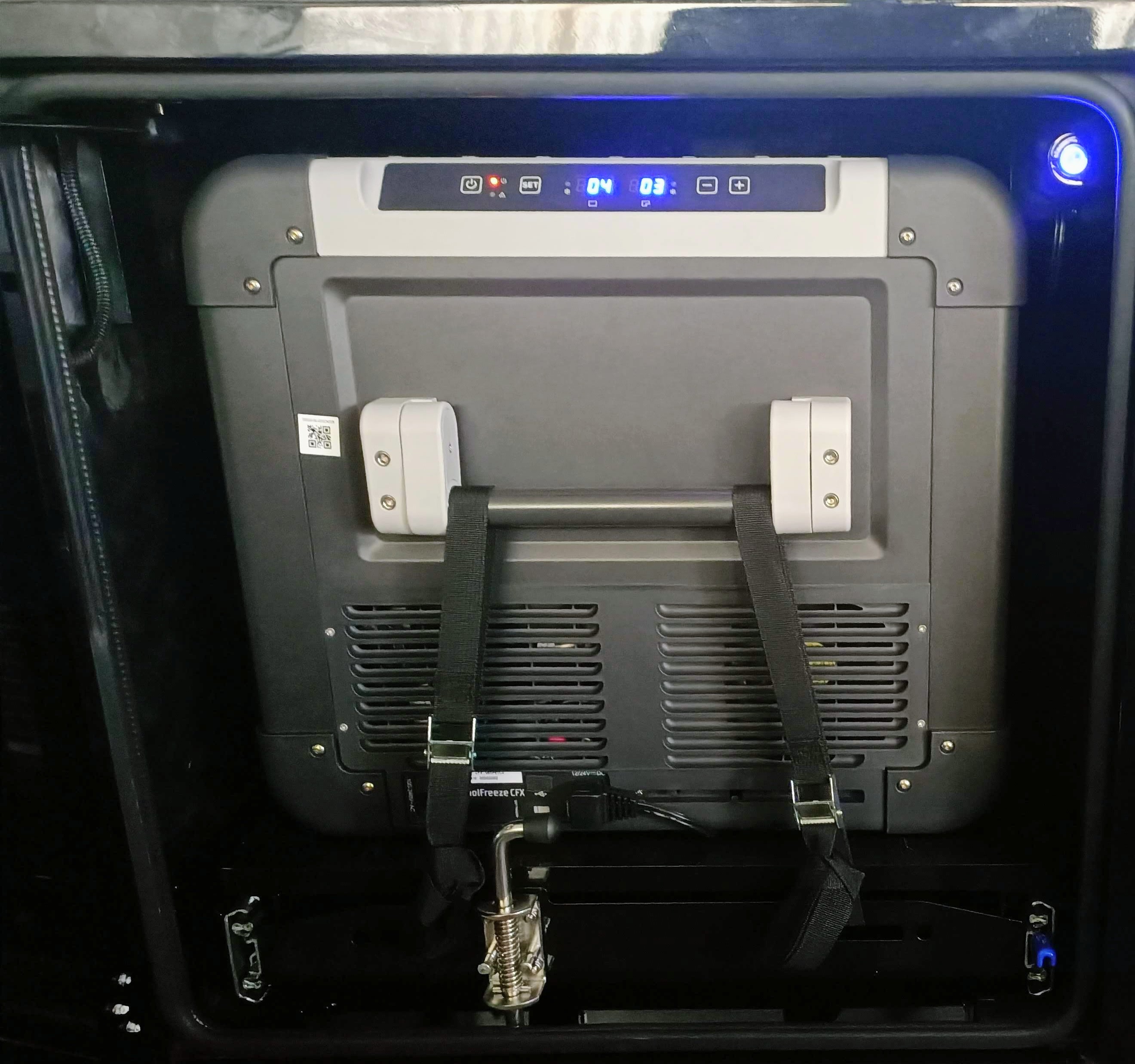
Heat is the big one. A fridge working in a 25°C cabin has a much easier job than one sitting in a closed canopy on a 40°C day. Ventilation matters for the same reason: if the fridge cannot dump heat out through the condenser, the compressor stays on longer.
- Ambient temperature: hotter surroundings mean longer compressor run time.
- Ventilation: do not box the compressor vents hard against drawers or gear.
- Direct sun: a dark vehicle or canopy can get far hotter than the outside air.
- Temperature setting: keeping drinks at 1°C uses more power than a less aggressive fridge setting; freezing needs more again.
- Warm food and drinks: pulling a fresh load down to temperature takes real energy.
- Opening it: every opening adds heat back into the cabinet.
- Condition and wiring: bad seals, dust, weak plugs and voltage drop all hurt performance.
Chest, upright and thermoelectric fridges
A top-opening chest fridge generally hangs onto cold air better when opened, while an upright is easier to live out of. I would not choose between them on door direction alone. Insulation, seals, compressor control and ventilation can matter more. If you are comparing models, a properly tested daily Wh or Ah figure is much more useful.
Thermoelectric coolers are a different animal. Many run almost continuously and can use considerably more power than a compressor fridge. If the unit is sold as a cooler/warmer rather than a compressor refrigerator, do not use the compressor-fridge numbers above.
What happens when one side is a freezer?
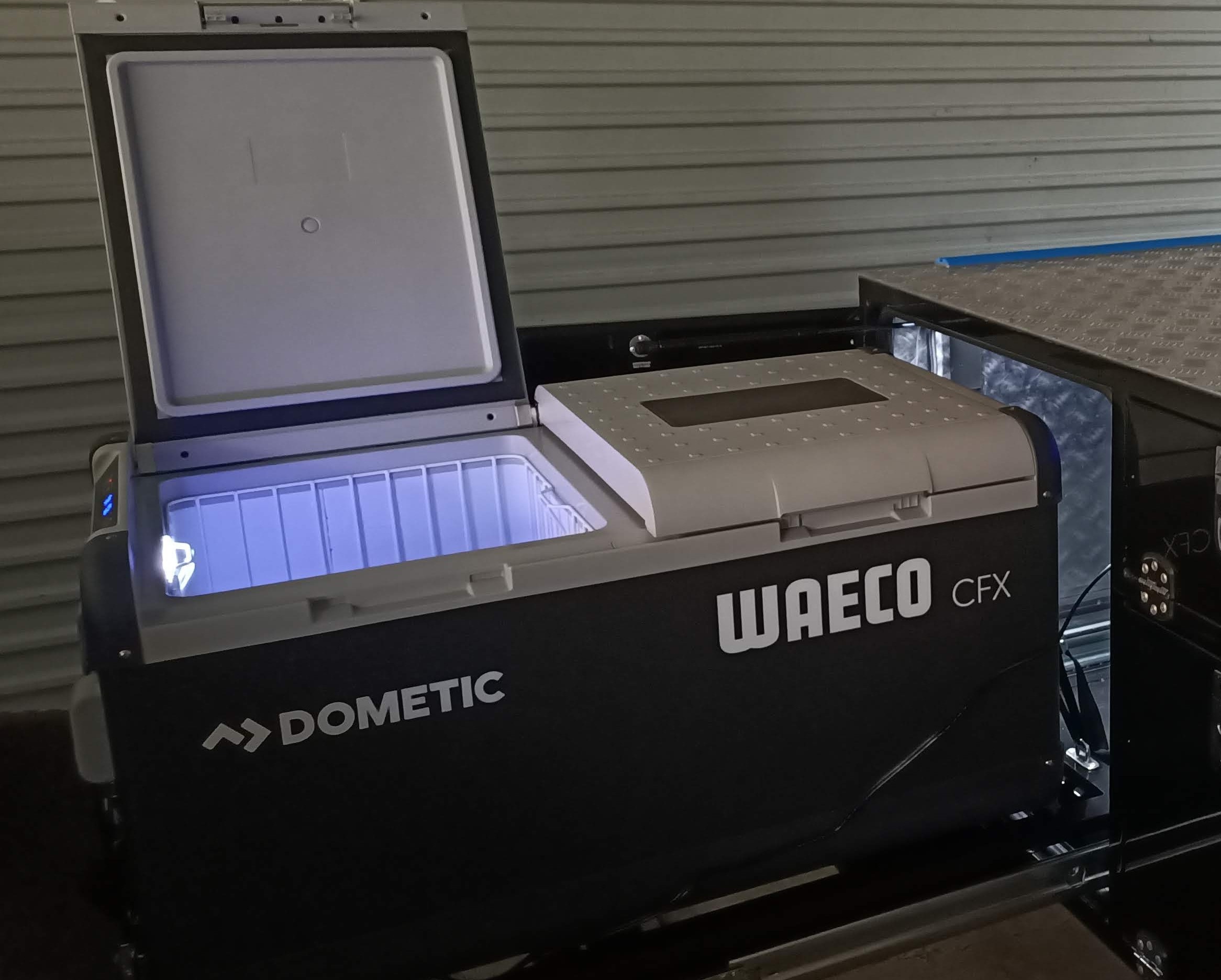
Freezer mode makes the compressor hold a much bigger temperature difference. As a rough planning allowance, running a compartment as a freezer can add around a third to daily consumption, but the actual increase depends on the fridge and conditions. For a big dual-zone fridge with one side frozen, I would plan toward the upper end of the range rather than hope for the lower figure.
Pre-freezing food at home helps too. Maintaining an already-cold, packed freezer is easier than asking the fridge to pull a warm empty compartment down to freezer temperature after you arrive.
Turning fridge use into battery size
Do not buy a battery based on the fridge alone. Add the rest of the gear first: lights, phones, pumps, Starlink, fans and anything running through an inverter. Then work out how long you want to sit without useful solar or driving.
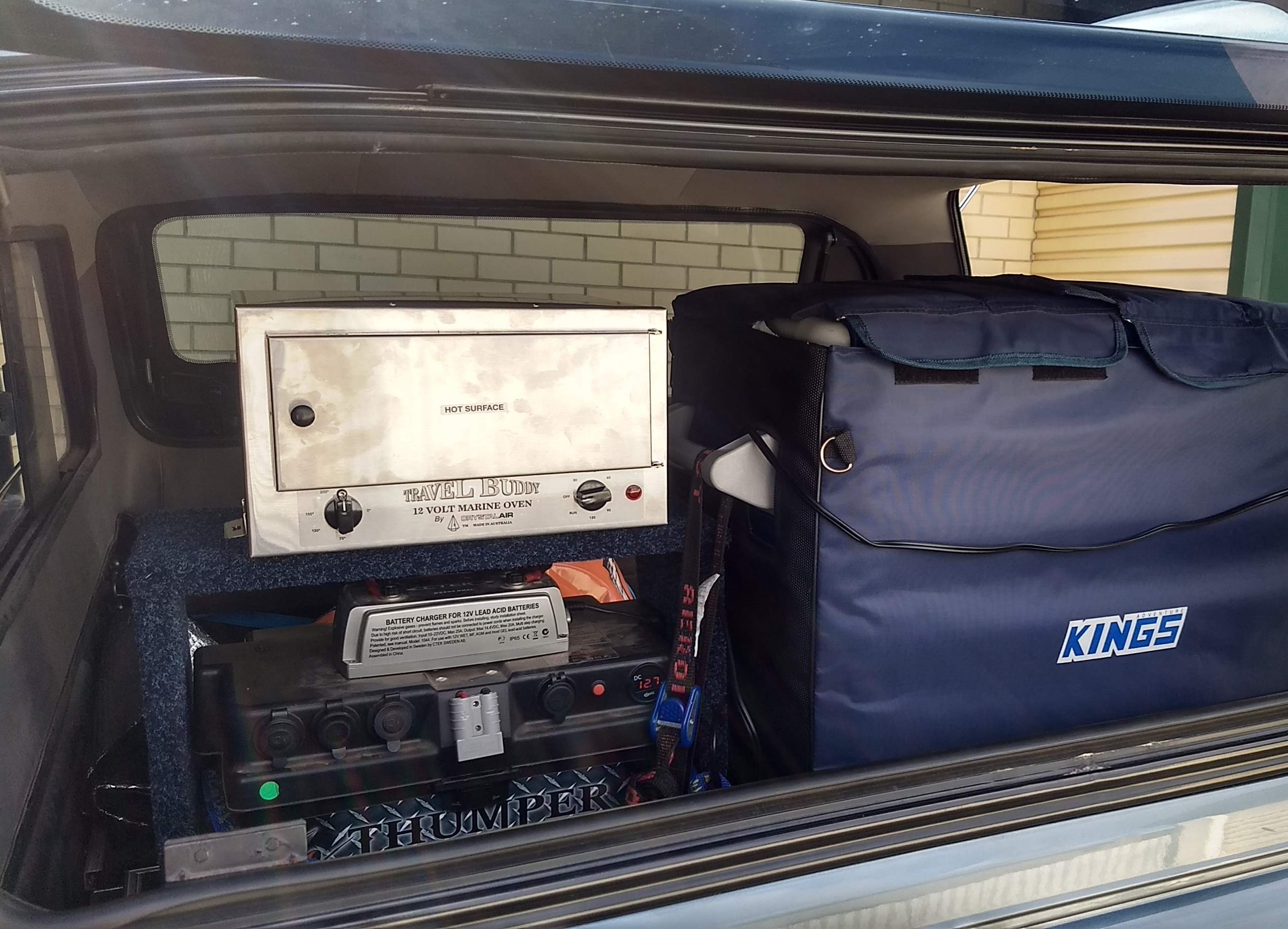
Say a 50L fridge uses 30Ah/day and your lights and phones add another 7Ah. That is 37Ah/day. Two days with no charging means 74Ah has to come out of the battery. A 100Ah lithium battery with roughly 85Ah available can cover that example, although there is not much spare once other loads or hot weather are added. A 100Ah AGM planned around 50% usable capacity cannot provide the same two-day reserve.
| 100Ah battery | Planning allowance | 30Ah/day fridge only |
|---|---|---|
| LiFePO4 | About 85Ah usable | About 2.8 days |
| AGM | About 50Ah usable | About 1.7 days |
Those figures are fridge-only planning numbers from a healthy, fully charged battery. Real runtime drops as soon as you add the rest of the camp loads.
A few real-world style examples
Allow roughly 20Ah/day for the fridge and another 7Ah for basic lights and phones. Around 27Ah/day is easy enough for a healthy 100Ah lithium battery over a weekend, provided you are not piling on other loads.
About 30Ah/day for the fridge, roughly 20–35Ah for 10 hours of Starlink Mini use and 7Ah for basics puts you near 57–72Ah/day. Starlink publishes average Mini consumption of 25–40W; the battery figure will also move with supply and conversion losses. Now a 100Ah lithium battery is not a two-day setup without charging. Driving time and solar suddenly matter a lot.
A big dual-zone running a freezer may be around 50–60Ah/day in demanding conditions. Add pumps, lights, devices and cooking and 70Ah/day or more is quite believable. This is where extra battery without enough charging can still leave you chasing power after a couple of days.
How much solar does a 12V fridge need?
If the fridge uses 30Ah today, you need to put roughly that energy back just to get the battery to where it started. Then you still have charging losses and every other load to cover. A 150–200W panel can be enough for a medium fridge on a good clear day, but winter, shade and extreme heat can wipe out that margin.
This is why I would not size solar from fridge litres alone. Work from the total daily load and how you camp. Someone driving every day can lean heavily on DC-DC charging. Someone parked under trees for four days needs a very different plan. The guide to choosing the right solar panel size for a 12V fridge explains how season, shade and real-world panel losses change the answer.
More battery is not the same as more charging
A bigger battery buys you more time, but it does not put any power back. If you use 40Ah overnight, that 40Ah still has to come from solar, driving or a mains charger later. The other side is just as important: a huge solar array does not help much at 2am if the battery is too small to carry the overnight load.
12V direct or through an inverter?
If your camping fridge is designed to run directly from 12V, use the 12V input. Running an inverter just to turn battery power into 240V adds conversion loss and possibly inverter idle draw for no real benefit. Some fridges accept both 12/24V DC and 240V AC; follow the manufacturer's instructions when both supplies are connected or available.
A household 240V fridge is different. For that, use a reliable daily Wh figure and make sure the inverter can handle compressor start-up rather than trying to apply a camping-fridge Ah table to it.
Measure your own fridge if you can
A shunt or battery monitor beats any generic table. Start with a fully charged battery and measure at least a full 24 hours. If you want the fridge number on its own, keep the other loads off. Then repeat the test in hotter weather. A result from a cool weekend does not tell you what the fridge will do in a Roxby-style summer.
A correctly rated plug-in 12V power meter can also work. Record total Ah or Wh over a day rather than staring at the live amp reading while the compressor happens to be running.
Easy ways to cut fridge power use
- Pre-chill the fridge, food and drinks before leaving home.
- Leave room around the compressor vents.
- Keep the fridge out of direct sun and avoid a sealed, heat-soaked canopy.
- Do not run it colder than you need.
- Keep seals and the condenser area in good condition.
- Use decent cable and connectors so voltage drop does not become the problem.
- Pre-freeze food or water bottles at home when that suits the trip.
What I would compare before buying
Fridge size and advertised running amps are not enough. Look for a tested daily energy figure and, just as importantly, the conditions it was tested in. A fridge already cold in a mild test room is not the same job as a fridge full of warm drinks in an Australian summer.
- Daily consumption in Ah or Wh and the test conditions.
- Actual fridge/freezer capacity.
- Required vent clearance.
- Low-voltage cut-out settings.
- Connector type, cable length and recommended cable size.
- Warranty, parts and service support in Australia.
Common questions
How much power does a 12V caravan fridge use?
Most efficient compressor fridges use roughly 15–60Ah per day. A common 40–50L caravan or camping fridge is often around 25–35Ah/day in mild conditions, with higher use in hot weather or a poorly ventilated cabinet.
Does a 12V compressor fridge run continuously?
Normally no. It cycles on and off. It can run for long stretches when first cooling down, in extreme heat or when it cannot get rid of heat properly.
Will a 100Ah lithium battery run a fridge overnight?
Usually, yes. A medium fridge might use roughly 10–18Ah over a 12-hour night depending on conditions. The bigger question is whether the battery can handle the fridge plus everything else until your next useful charge.
Is a chest fridge more efficient than an upright?
A chest fridge generally loses less cold air when opened, but I would still compare the actual tested consumption of the models you are considering. Good insulation and compressor control can matter more than the door layout.
Driving between camps can replace a large share of the power your fridge uses. See what size DC-DC charger you need based on your daily use and normal driving time.
If you want to see what the fridge does to the rest of your setup, put your fridge, other gear and travel pattern into the 12V power and caravan battery calculator and it will size the battery, solar and charger together.