A 200W panel should be a 200W panel, right? Not necessarily. Two panels can both have 200W printed on the box and behave completely differently once they're bolted to a roof, laid out at camp, or wired into your controller. Voltage, heat, shade, cable losses, build quality — even how honest the wattage claim actually is — all decide how much of that number actually reaches your battery.
That doesn't mean you need to spend up big every time. It means wattage is where the comparison starts, not where it ends.
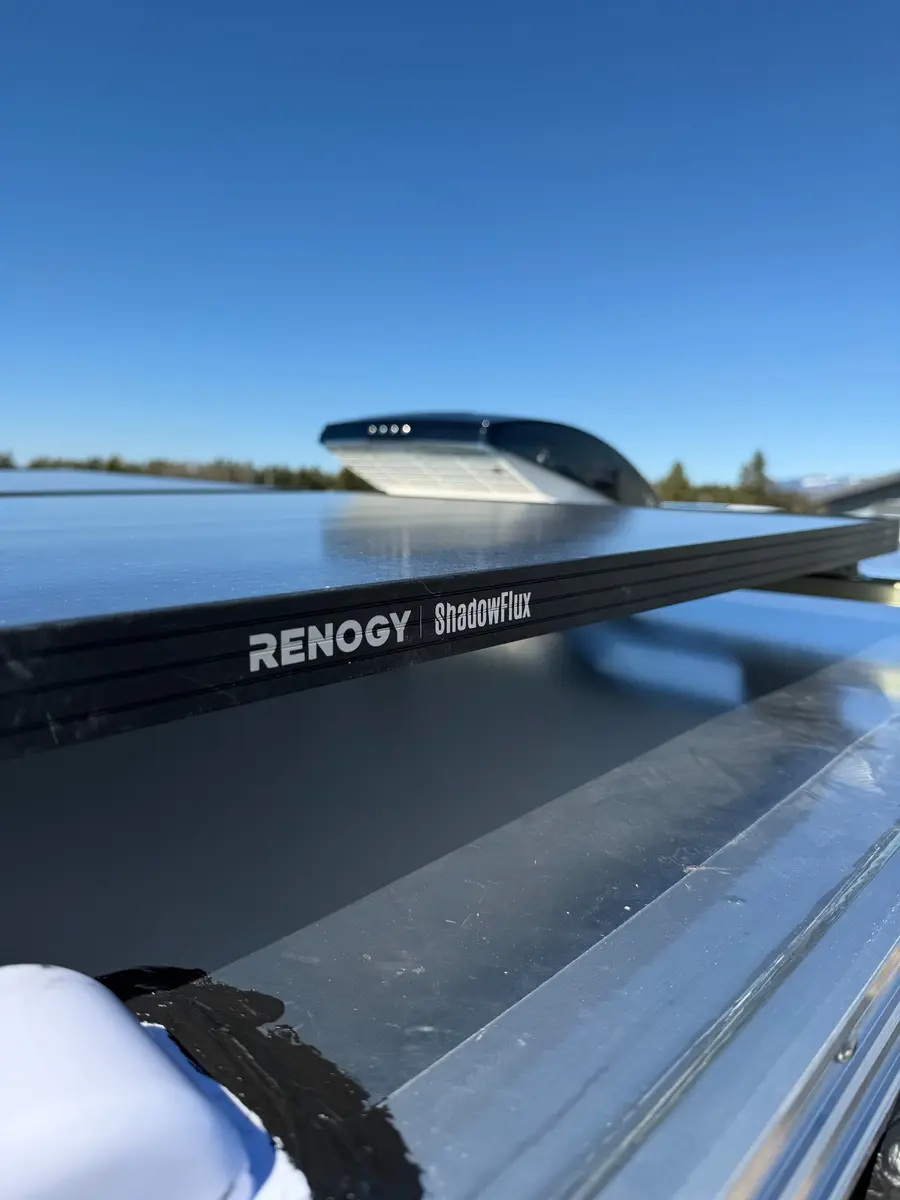
That wattage number is a lab result, not a promise
A solar panel's wattage is a laboratory rating, not the output you should expect all day on a vehicle or caravan roof. Standard Test Conditions use a 25°C cell temperature, fixed light intensity and defined spectrum, making the figure useful for comparison but not a real-world charging promise.
Real-world output moves around with:
- the angle and strength of the sun
- how hot the panel's actually running
- cloud, dust and shade
- how it's mounted
- cable and connector losses
- your battery's state of charge
- what your controller's actually doing at that moment
You'll see it briefly touch its rated number in good conditions. Most of the time it'll sit under that — and that's completely normal, not a fault.
A "12V panel" doesn't actually make 12V
A “12V solar panel” is designed for a nominal 12V battery system; it does not normally output exactly 12 volts. Its real operating and open-circuit voltages are listed on the datasheet:
- Pmax — maximum rated power (watts)
- Vmp — voltage at maximum power
- Imp — current at maximum power
- Voc — open-circuit voltage
- Isc — short-circuit current
A panel with Vmp of 20V and Imp of 10A gives you roughly 200W (20 × 10 = 200). Another 200W panel might get there with a completely different voltage/current split. Doesn't matter for the sticker — matters a lot for whether it plays nicely with your controller or another panel.
It has to actually match your controller
The panel or combined array must stay within the controller's maximum solar voltage, input current and supported wattage. Exceeding any one of those limits can stop the system working correctly or damage equipment.
The big one: your array's Voc has to stay under the controller's max PV voltage, including on a cold morning. Panel voltage climbs when it's cold, so checking Voc at the standard 25°C rating alone doesn't leave you enough margin. Go over the limit and you're not just wasting panel — you can genuinely fry the controller. Use the temperature coefficient, follow the manufacturer's sizing guide, or get it checked properly.
PWM and MPPT use your panel differently
MPPT controllers can convert excess panel voltage into useful charging current, while PWM controllers pull the panel close to battery voltage. With PWM, voltage above the battery's charging level is largely unused.
An MPPT controller runs the panel closer to its actual maximum-power point and converts that into whatever the battery needs. Genuinely useful with higher-voltage panels and variable conditions — but it's not magic. It can't invent power that isn't there, and the array still has to sit inside the controller's voltage, current and wattage limits.
This is exactly why swapping a panel or controller based on wattage alone can bite you — a panel that worked fine on one setup might not suit the next.
Over the years on the Dmax I ran a 100Ah AGM through a CTEK D250 — a combined DC-DC and solar unit — and tried three completely different panels on that same setup: a 110W fixed panel, a 160W folding panel, and a 120W blanket. Same battery, same charger, three genuinely different results, which is the long way of saying panel type matters as much as the number on the box.
Heat kills output more than people expect
Panels want bright sun, but the cells themselves don't love being hot. As they heat up, voltage drops and so does max power. The datasheet's temperature coefficient tells you how much power you lose per degree above the 25°C test point — a less-negative number holds up better in heat.
This matters a lot for a dark panel sitting hard against a canopy, caravan or roof rack with no airflow underneath — the cells can run well above the surrounding air temperature. A panel with a slightly better heat rating and proper ventilation can genuinely outperform its label on a stinking hot day, purely because it isn't cooking itself.
A small shadow does disproportionate damage
Cells inside a panel are wired together, so shading part of it can drag down output from more than just the shaded bit. Bypass diodes and better cell layouts soften this, but they don't make shade a non-issue. A roof rack bar, an aerial, an open vent, even a thin branch shadow across a row of cells — all of it costs you more than the physical shaded area suggests.
Positioning genuinely matters more than the brand on the box. A clear, well-placed 160W panel will beat a partly-shaded 200W panel most days of the week.
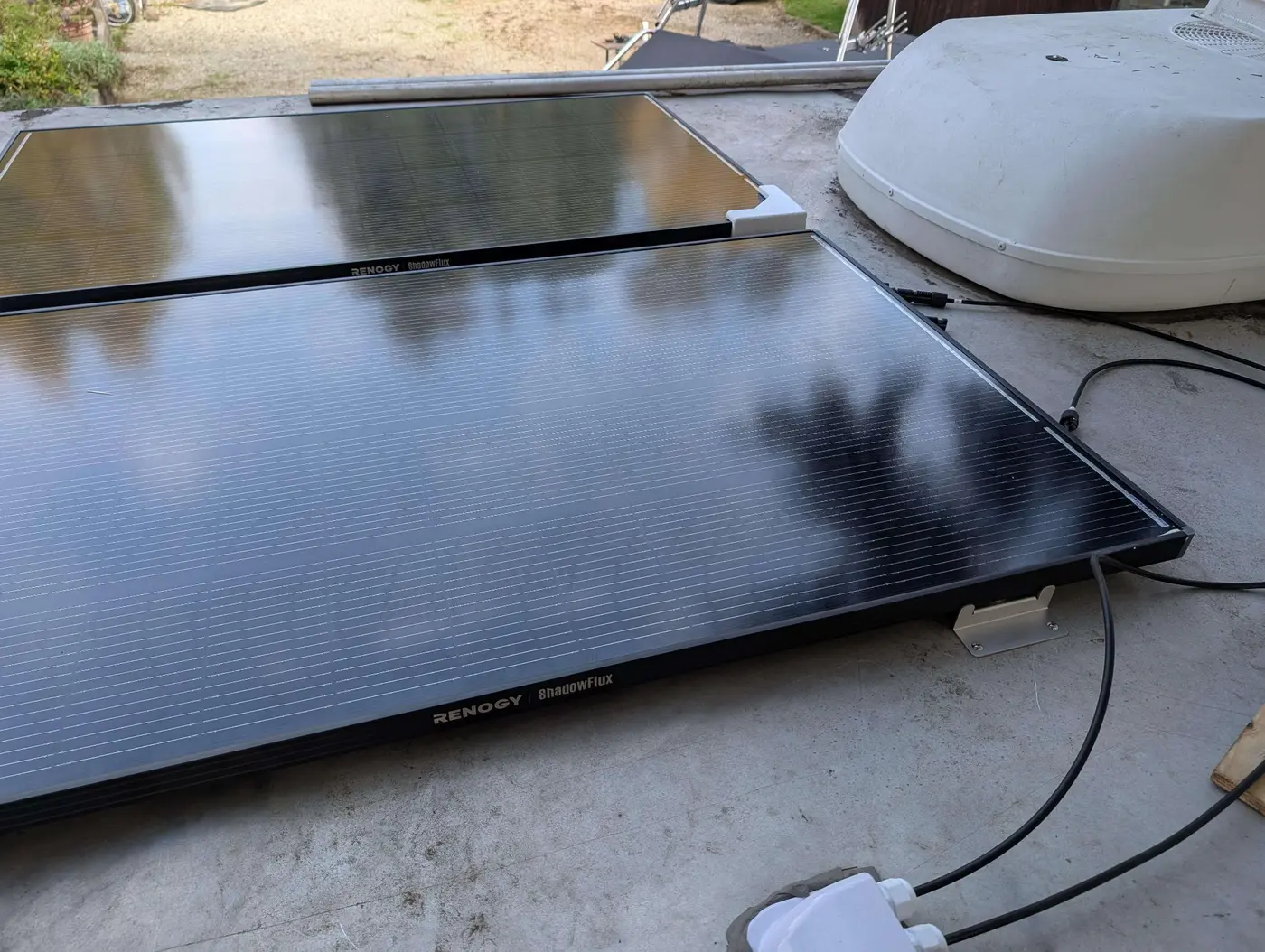
Fixed, folding, or a blanket — pick for how you actually camp
Choose fixed panels for automatic daily charging, portable panels for adjustable angle and shade avoidance, or combine both for flexibility. The best format depends on how your vehicle or camper is parked and how often you move.
- Fixed framed panels — always working the moment there's sun, zero setup at camp. Trade-off: permanent weight, can't chase the sun, and roof accessories can shade them.
- Folding framed panels — you can put these in direct sun while the rig sits in shade. Robust, easy to aim, but they eat storage space and need setting up and packing away.
- Solar blankets / flexible panels — light and compact, great if space is tight. Build quality varies a lot though — folding, heat, cheap leads and poor sealing all take a toll on the flexible ones over time.
A smaller portable panel you actually position properly every time will often out-earn a bigger fixed one that spends half the day under roof-rack shadow.
Of the three I've run, the blanket never gave me the best charge on its own — it consistently lagged behind the fixed and folding panels. But it's found its place: at motorsport events, space gets tight fast and the usual camping gear just doesn't fit. There, I run the fixed 110W panel already on the 4x4 combined with the 120W blanket through a 2-into-1 Anderson plug — both feeding in together — which covers the fridge, GoPro and 18V tool batteries, and even keeps the Travel Buddy going for a hot pizza between runs.
Cables and connectors waste good panel output too
The panel's only half the story. Long, undersized leads bleed voltage. Dodgy crimps, corroded connectors and cheap adaptors add resistance and heat you don't want.
Portable panels cop this the worst — long extension leads are basically part of the deal. Higher current and longer runs need heavier cable to keep the losses in check. And don't assume a connector shape means anything about quality — similar-looking plugs can have very different current ratings and contact resistance. Always check polarity before plugging into gear you're not familiar with.
Build quality is not just marketing fluff
Two electrically identical panels can differ hugely in:
- frame strength and mounting points
- glass and encapsulation quality
- how well it handles vibration and flexing
- junction box and cable sealing
- connector quality
- certification and quality control
- warranty length — and whether the supplier's actually still around to honour it
For touring, corrugations, dust, rain and getting thrown in and out of the back of the ute matter just as much as lab efficiency numbers.
Be skeptical of numbers that don't add up
Easy reality check: physical size. There's a real ceiling on how efficient a solar cell can be, so a tiny panel claiming a massive wattage is worth being suspicious of.
Look for a real datasheet — Pmax, Vmp, Imp, Voc, Isc, temperature coefficients, actual dimensions and weight. A cheap "300W" blanket isn't good value if the 300W was never real to begin with.
Two "200W" panels, side by side
These figures are made up for illustration — not real products — but they show how two panels with the same headline number can be genuinely different purchases.
| Detail | Panel A | Panel B | Why it matters |
|---|---|---|---|
| Advertised power | 200W | 200W | Looks identical on the sticker |
| Vmp / Imp | 20V / 10A | 25V / 8A | Same wattage, different controller matching |
| Voc | 24V | 30V | Changes controller compatibility and array sizing |
| Temp coefficient | -0.34%/°C | -0.44%/°C | Panel A holds power better as it heats up |
| Shade handling | Documented bypass sections | Not stated | Real-world shade performance likely differs |
| Leads / connectors | Heavy cable, rated connectors | Thin, unmarked lead | Losses and reliability likely differ |
| Warranty | 10 years, local supplier | 12 months, unclear support | Only worth something if you can actually claim it |
Before you buy, check
- Is the wattage backed by a full datasheet?
- What are the actual Vmp, Imp, Voc and Isc figures?
- Will the panel (or array) sit inside every controller limit?
- Have you allowed for cold-weather Voc?
- PWM or MPPT — is the panel actually suited to it?
- How's it going to handle heat and airflow where you're mounting it?
- Will roof gear or your usual campsite shade it?
- Right cable, connectors and fusing for the current it'll carry?
- Built for repeated packing and corrugations, or a one-trip wonder?
- Is the warranty backed by someone who'll still be around to honour it?
Bottom line
Don't buy a solar panel on wattage alone. A genuinely good panel has a believable rating, real electrical specs, decent build quality, and actually matches your controller, battery and installation. Where you mount it, how it's cooled, whether it's shaded, and the quality of the cable running to it can matter just as much as the name printed on the front.
Once you've got a realistic figure for your daily power use, run it through the 12V calculator to size your solar and battery — then check the final panel and controller combination against the actual manufacturer specs before you commit.
I've since moved the Dmax on from the AGM and CTEK to a 120Ah Kings lithium in a BatBlock25 — a plug-and-play box with the DC-DC charger and solar controller already built in — running a 110W panel. If you're shopping for a panel right now, my honest take is: worry less about chasing watts and more about matching it properly to your charger and being realistic about where you'll actually mount it. The panel type made a bigger difference than the number ever did.
Heads up: this is general info, not vehicle-specific electrical advice. Solar arrays can stay live in daylight, and wrong voltage, wiring, connectors or mounting can damage gear, shock someone, or start a fire. Follow the manufacturer's instructions and get a qualified auto electrician involved where it counts.
Sources
These back up the general principles above — always check your own gear's actual manual for product-specific limits.