If your camper is parked fully in shade, a roof-mounted solar array may produce very little useful charge. Shade-tolerant panel design can reduce the damage caused by a narrow branch, roof-rack bar or vent shadow, but it cannot create sunlight. For camps under trees, the most reliable setup is often fixed solar for automatic charging plus a portable panel that can be moved into clear sun.
Patchy shade across part of a panel and parking the whole camper beneath a tree are different problems. Bypass diodes and panel layout may help with a small local shadow. In full shade, moving a portable panel into sun usually matters more than buying a larger fixed array.
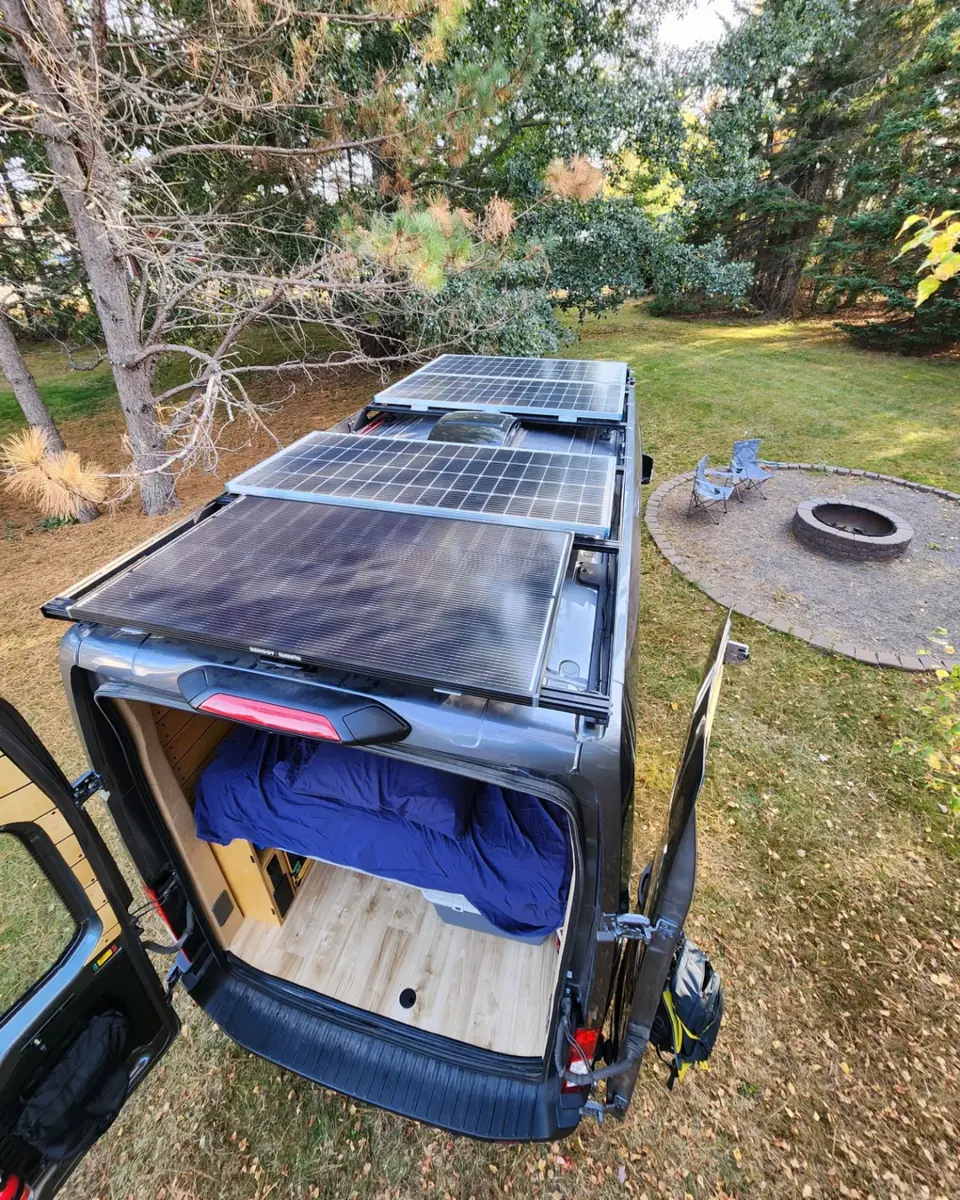
Partial shade versus a camper parked in shade
Partial shade means direct sun still reaches most of the panel while a smaller shadow crosses part of it. Common causes include roof-rack bars, vents, an air conditioner, antenna, Starlink hardware or nearby branches. Depending on the panel's internal layout, a surprisingly small shadow can restrict the current from a much larger section.
Full shade means the vehicle, caravan or camper is parked under dense tree cover or beside a structure and the roof receives little or no direct sun. The panels may still register some output from diffuse daylight, especially under bright cloud, but you should not plan a fridge and battery system around that weak and highly variable contribution.
Why a small shadow can cause a big loss
Solar cells are electrically connected in groups. When one shaded cell cannot pass the same current as the cells receiving full sun, it can restrict that group. Many panels use bypass diodes so current can route around an affected section rather than losing the entire panel, but the result depends on the panel's cell layout, the direction of the shadow and how many sections are covered.
That is why there is no honest universal claim such as “10% shade equals 10% less power.” A thin roof-rack shadow running across several cell groups can behave differently from a small leaf shadow contained within one section. Shade-tolerant construction can improve the outcome, but every covered cell is still receiving less solar energy.
Cloud is not the same as shade
Solar panels can charge under cloud because diffuse light still reaches them, but output normally falls and can change quickly as cloud thickness changes. Bright overcast conditions may provide useful charging; dark storm cloud or dense tree cover may provide very little. No anti-shading design makes a panel perform at its rated wattage without adequate light.
Plan from the conditions in which you actually camp. If your battery must support a fridge through several cloudy days, allow more usable battery capacity and another dependable charging source rather than assuming the solar rating will be available.
Fixed rooftop or portable solar?
| Option | Best at | Main compromise |
|---|---|---|
| Fixed rooftop | Automatic charging while parked in sun or travelling | Cannot be moved away from trees or roof shadows |
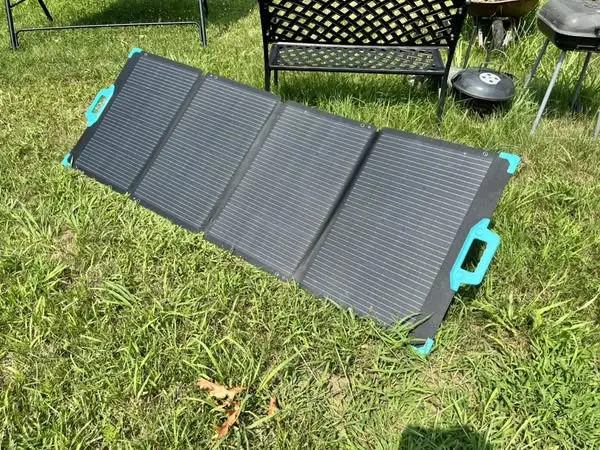
| Portable panel | Chasing clear sun while the camper stays cool in shade | Must be carried, set up, secured and repositioned |
| Fixed + portable | Touring across open and shaded camps | More cost, storage and controller/cabling planning |
A smaller portable panel in unobstructed sun can outperform a larger roof array under dense shade. Cable length, voltage drop and controller limits still matter, so use suitable connectors and cable and follow the equipment manuals.
My 2015 Isuzu D-Max originally ran a 100Ah AGM battery, a CTEK D250 and a 60L Kings fridge. About 30 minutes of driving a day could keep it going for three to four days in spring and summer. In hotter weather I needed extra driving roughly every two days. After adding a 110W roof panel to the CTEK's solar input, the battery stayed near full for most of the year. But on 40-plus-degree Outback days with nights still above 30°C, the fridge worked hard enough that I still needed extra alternator charging. Solar helped enormously; it did not remove the need to plan for heat, shade and poor-weather days.
How to reduce shade losses
- Map the roof before mounting. Check shadows from racks, vents, air conditioners and antennas across the full day.
- Leave separation from obstacles. A panel hard against a roof-rack bar is more likely to receive a persistent narrow shadow.
- Keep panels clean. Leaves, bird droppings and dust create local obstructions as well as general output loss.
- Use more than one charging source. Solar, DC-DC alternator charging and suitable mains charging cover different conditions.
- Carry portable solar when shaded camping is normal. Put the panel in sun while the vehicle or camper remains cool.
- Size for the difficult trip. Winter, heat, tree cover and days parked matter more than a perfect summer test.
Start with your actual daily load using the free AMP'D 12V calculator. Select the season and shade that match your trips, then compare the result with the roof area and portable capacity you can realistically carry.
Build a system, not just a panel number
Panel wattage alone does not guarantee time off-grid. Battery capacity determines how long you can ride through a poor solar day, while the charger and driving time determine how quickly the alternator can put energy back. Read the solar sizing guide, panel comparison guide and DC-DC charger guide together before buying around a single best-case rating.
Bottom line: better shade behaviour is useful when a small shadow is unavoidable. It is not a substitute for direct sunlight. If you regularly park the camper under trees, give yourself a way to place some solar in the sun—and enough battery or alternator charging to cover the hours when you cannot.